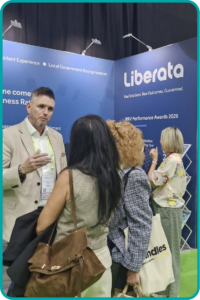
A view from Stand 5 at IRRV 2026
One of the best things about the IRRV Annual Conference is the chance to step away from the day-to-day and talk in person with people about their situations and ongoing challenges, any of whom face the same issues.
For Local Government leaders and practitioners, that meant comparing their situations with peers in similar roles and hearing how other authorities are approaching familiar issues. They also gain an outsider’s perspective by speaking directly with commercial organisations working across the sector.
For us, it is just as valuable because we get to listen to what is happening within Councils’ services and understand what is on their to-do lists.
This year, several themes kept coming up in conversations at our stand: Local Government Reorganisation (LGR) disruption, service transition readiness, arrears and debts, and the pressure on teams to manage future change while continuing to deliver today’s services.
Challenges of LGR uncertainty
We heard how varied the picture is on Local Government Reorganisation and how the recent pause is affecting plans, while also acting as a breathing space.
Some councils know which authorities will come together and how their future services may be organised. In contrast, others are still working through several possible scenarios.
One conversation focused on a District Council that currently has a shared service with a neighbouring council. Under LGR, it could eventually become part of a different unitary authority, potentially separating or substantially changing an arrangement that works well today.
Similar conversations touched on existing contracts and which system platform would be used in the future, and the practicalities of migration and adoption. Some councils have already begun their preparation, even though the final organisation or service model is still taking shape.
People are realistic about implementation and what it will entail. Many delegates have been through previous system changes and know that teething problems will happen.
These experiences make people cautious about managing future change, but they also give them the knowledge to watch for what to expect and to feed their thoughts into higher-level discussions within their authority.
Finding a realistic baseline
As part of LGR service and systems discussions, we spoke about service readiness and preparing for major change.
Councils can differ considerably in their staffing, processes, levels of automation and overall performance. Those differences become more important where services may eventually need to come together.
Benchmarking helps establish a baseline before deciding on future services. Most authorities tend to compare against neighbouring councils. Our benchmarking tool instead considers socio-economic circumstances for a fairer comparison.
Our team explained the advantages of this approach and how different levels of deprivation in neighbouring areas could affect collection rates, debt recovery, and bad debt provision levels.

Approaches to debt levels and recovery
Enforcement agencies and organisations concerned with resident vulnerability dominated the stands at the IRRV exhibition, reflecting the scale of debt within Local Government.
The conversations also showed that the value of recovery activity can look different depending on the authority. Some authorities are actively reviewing how they deal with longstanding debt. Others continue to work through older cases internally when resources allow.
For District Councils, much of the Council Tax collected is passed to the County authority, so the amount retained locally is only part of the picture. Resolving longstanding cases, improving available information, adding capacity, and helping residents find an appropriate way forward can all matter too.
Our Debt Assist solution differs from the norm, using targeted approaches to different debt types and those who owe money, councils improve recovery rates, reduce bad debt provision, and support their vulnerable residents.
Our IRRV takeaways
These themes overlapped across the country, no matter which authority a delegate was from.
A conversation about LGR could quickly move on to practicalities or funding. Discussions about aged debt can lead to capacity and the practical limits on what teams can handle internally. And all these competing priorities happen while councils continue to run essential services for their residents.
For us, those conversations are valuable. They give us a clearer picture of what people behind the scenes within councils are being tasked to deal with now and the questions they are being asked to find answers to.
If you were at this year’s IRRV and missed us, or want to learn more about any of these themes and discuss them with one of our specialists, please get in touch.